

Workflow discovery
Document how work arrives, who acts on it and where decisions or handoffs happen. Distinguish essential rules from habits that a new tool does not need to preserve.
HanovaDevs / Product engineering
Bring scattered work into one considered system.
Turn a fragmented process into a focused application. Practical requirements, considered interfaces and engineering decisions you can understand.
Start with the right problem
Custom software starts with understanding the work—not choosing a stack. We map users, responsibilities and data before designing the screens and services that connect them. Scope is shaped around a useful first release and a maintainable path forward.
What comes together
The right result needs more than one isolated deliverable. These workstreams help shape a coherent engagement.
Document how work arrives, who acts on it and where decisions or handoffs happen. Distinguish essential rules from habits that a new tool does not need to preserve.
Plan screens and states around actual tasks. Empty states, permissions, review actions and exceptions receive attention alongside the main happy path.
Model the records the application needs and define how external systems connect. Agree validation, data access and failure-handling responsibilities.
Organise implementation around reviewable increments. Document the environments, acceptance conditions and support arrangements that will matter after release.
What could we make together?
Find the kind of project you have in mind. These are possible engagement types; the brief decides the exact deliverables.
Organise the client lifecycle and the work around each account.
Client records · Follow-ups · Activity views
Discuss this project typeBring planning, task ownership and shared procedures into one workspace.
Planning · Team workflows · Reporting
Discuss this project typeDesign around the agreed product, stock and operational record flows.
Product records · Stock views · Transaction journeys
Discuss this project typeGive each audience an appropriate place to view or submit information.
Role-based views · Requests · Status tracking
Discuss this project typeBuild a focused first release around the essential user journey.
Core workflow · Reviewable increments · Feedback plan
Discuss this project typeConnect applications with explicit data ownership and exception handling.
Data mapping · Validation · Retry paths
Discuss this project typeChoose the situation closest to yours to see how the work can begin.
Replace a clearly defined collection of spreadsheets or manual handoffs with an application built around the team’s actual responsibilities.
Separate the core user problem from the longer wish list. Agree what a useful release contains and what evidence should guide the next iteration.
Plan how data moves between the application and existing tools. Define ownership, validation and retry behaviour instead of assuming every request succeeds.
10 familiar challenges / practical responses
See how we would approach the problem—and what we would check before calling the work complete.
Find the right level of help ↓Map the source records and relationships, then design a shared workspace for the essential operational picture.
Reconcile agreed sample records and test the tasks that depend on them.
Make task ownership, status transitions and handoff rules visible in the relevant workflow.
Walk through assignment, reassignment and overdue or unowned work.
Define roles and enforce access at the relevant server and data boundaries, not just in the interface.
Test allowed and denied actions for each agreed role.
Review supported integrations and agree which system owns each field or record.
Check duplicate events, conflicting updates and unavailable integrations.
Separate essential business rules from habits, then build only the workflows that justify a custom system.
Review working journeys against real, agreed acceptance examples.
Set a useful release boundary and separate essential workflows from later features.
Maintain a visible scope, acceptance checklist and change-decision record.
Profile the source data, map fields and agree how exceptions, duplicates and validation will be handled.
Rehearse on a copy and reconcile counts and representative records before cutover.
Design empty states, corrections, rejected inputs and recovery paths alongside the main workflow.
Exercise representative exception cases with the people who handle them.
Define each report’s source, calculation, filters and responsible owner before building dashboards.
Compare agreed report examples against their underlying records.
Document environments, dependencies, deployment and agreed support responsibilities as part of handover.
Review access ownership and rehearse the agreed release or recovery procedure.

A scope that fits the situation
You may need an independent review, a defined build or a focused improvement. Start with the work that matters now, with responsibilities and boundaries agreed.
Talk through the options ↗For a complex workflow that needs definition first.
For a defined system with an agreed owner.
For an existing application that needs the next capability.
From the first conversation to delivery
Review points make decisions visible. Scope, dependencies and feedback responsibilities shape the delivery plan.
Identify users, rules, source records and the decisions the system must support.
Agree workflows, interfaces and acceptance criteria before implementation.
Review working paths and integration boundaries at planned checkpoints.
Test agreed roles and exceptions, then prepare the handover and support plan.
Designed to be useful after delivery
Know what you own, what your team can change and who is responsible for the next update. The proposal sets out files, access, documentation and support.
Third-party fees and ongoing work are discussed separately.
Quality is part of the work
Check the intended permissions and server-side access rules, not just hidden buttons.
Validate required inputs, state transitions and agreed recovery paths.
Document environments, dependencies and the people responsible for ongoing changes.
See the thinking in practice
Explore the challenge, delivered interface and evidence behind the story. Each project has its own context and outcomes.
 View case study ↗
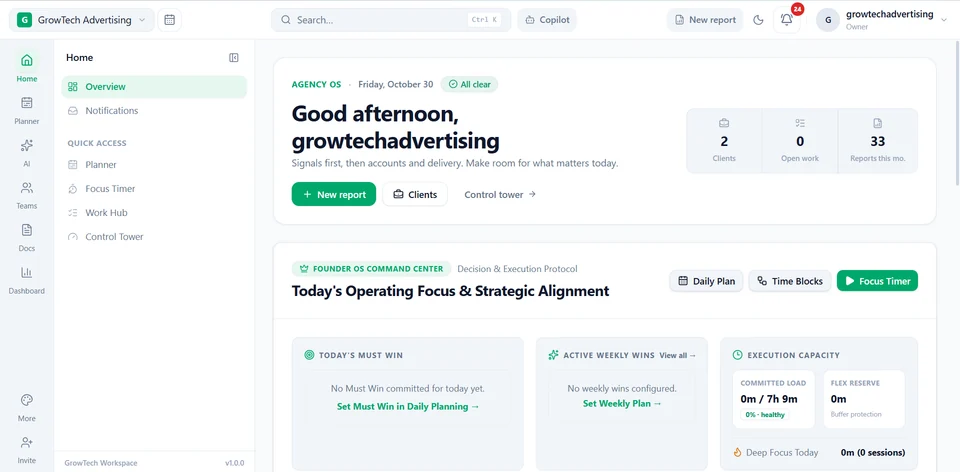
Agency operations CRM
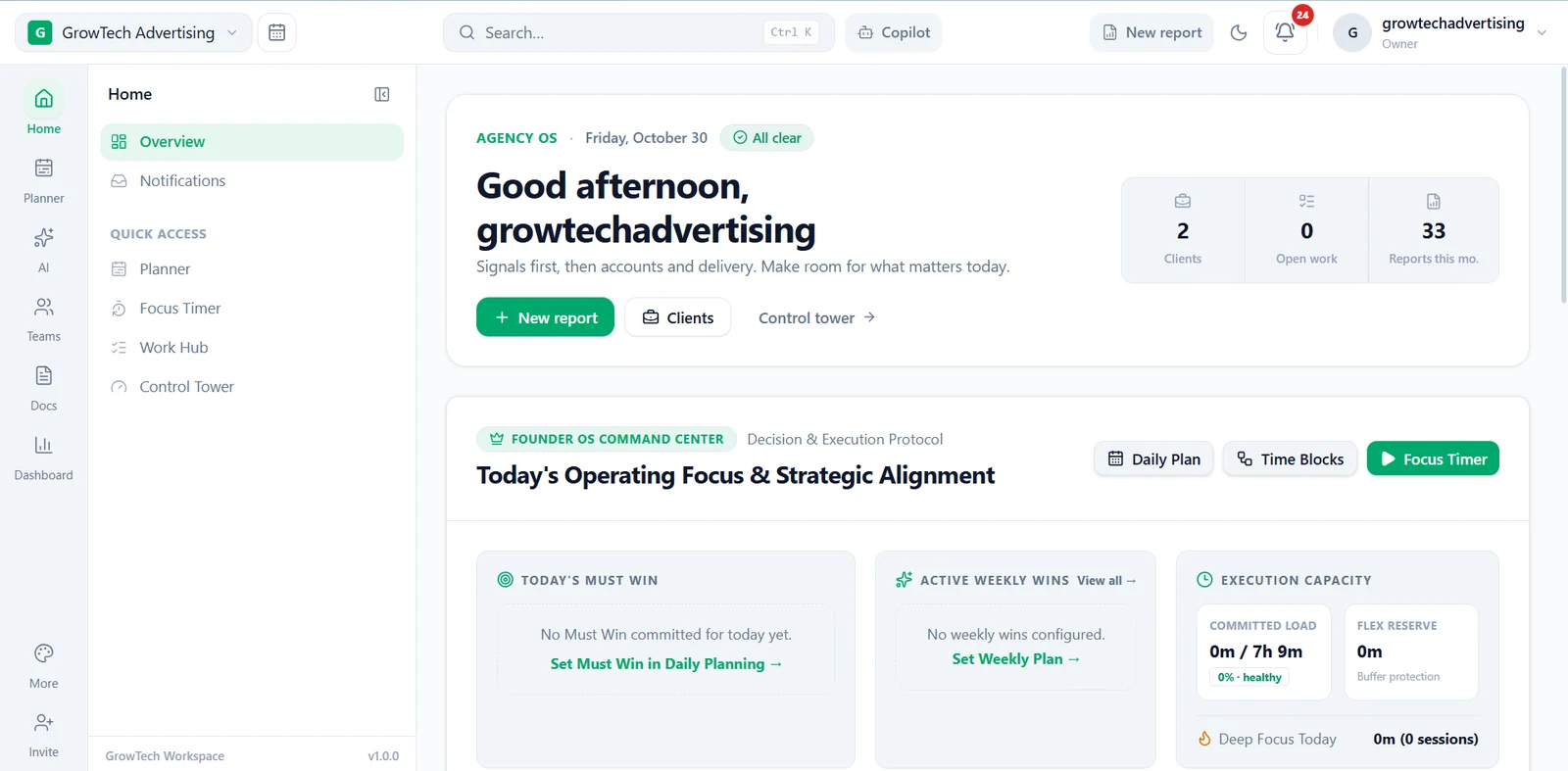
An internal agency workspace bringing client access, reporting entry points, planning and daily operating priorities into a connected interface.
Private workspace · Screenshot walkthrough, not a public demo
Read the case study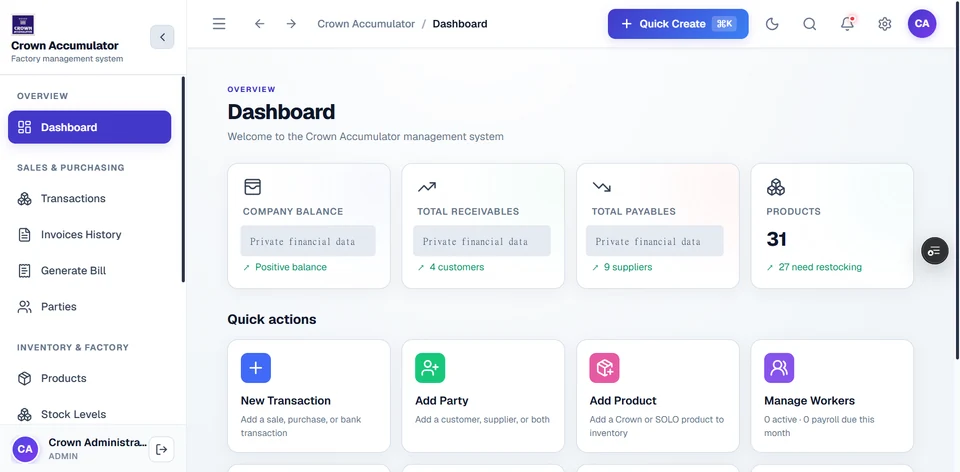 View case study ↗
Factory & business management
A custom management interface bringing transactions, invoices, parties, products and stock navigation into one administrative workspace.
Private workspace · Screenshot walkthrough, not a public demo
Read the case studyEvidence instead of empty promises
A finished deliverable and a business result are different things. We agree what can be tested directly and what needs observation after release.
Map the current task, record sources, exception cases and any existing baseline.
Verify scoped workflows, access boundaries, data validation and agreed integration failures.
Review task completion, exceptions and adoption with a defined sample and observation period. Claim time savings only when measured.
You do not need a perfect brief
A few useful inputs make the first conversation more specific. If something is missing, we can identify it together.
Share your brief ↗Use redacted examples where needed. Don’t send passwords or private customer records in an enquiry.
Show the records, decisions and exceptions involved in one important task. Use synthetic or appropriately redacted data.
Who uses the system, what each person needs to do and who approves business rules.
The tools, source formats and available integration documentation that affect the work.
The essential first workflow, operational constraints and the person who will accept delivery.
Useful answers before we start
Have a question specific to your project? Tell us the context and we’ll discuss the next step.
Ask the team ↗Possible project types include custom crm workspaces, operations & team platforms, inventory & factory systems, customer & partner portals, product mvps, apis & system integrations. We define the deliverables, dependencies and acceptance criteria in the proposal for your project.
We identify the core user problem, essential workflows and the constraints that affect delivery. The first release is agreed around useful acceptance criteria, with later features separated rather than implied.
Where appropriate, yes. We review available APIs, authentication, licensing, source data and integration limits before recommending how systems should connect.
Role and permission requirements can be part of the scope. They need enforcement at the relevant server and data boundaries, and tests for both allowed and denied actions.
Maintenance, incident handling, response expectations and feature development are discussed as explicit support arrangements. They are not automatically an unlimited part of the initial build.
We review the requirements, integrations, available assets and review responsibilities before proposing a price and delivery plan. The website estimator is an illustrative planning tool, not a binding quotation or a promised delivery date.
The proposal defines source and design access, documentation, account ownership, licensing and any training or support. Third-party subscriptions, maintenance and future feature work are identified separately rather than assumed to be included.
Your next project starts with a conversation
Tell us what you need to improve, what you have already tried and what matters most.
Let’s discuss your project ↗