

Positioning & direction
Clarify the audience, business context and intended character. A shared direction helps evaluate design choices without reducing the process to personal preferences.
HanovaDevs / Identity & direction
Make every touchpoint feel unmistakably yours.
Positioning, visual direction and practical brand assets that belong together. A system your team can use beyond the first presentation.

Start with the right problem
A brand identity needs to work across the places your business shows up. We connect audience and positioning with typography, colour, imagery and practical usage guidance, so decisions have a clear reason behind them.
What comes together
The right result needs more than one isolated deliverable. These workstreams help shape a coherent engagement.
Clarify the audience, business context and intended character. A shared direction helps evaluate design choices without reducing the process to personal preferences.
Explore identity directions and how they work at different scales. Review the mark alongside typography, spacing and supporting design elements.
Build a considered palette and type hierarchy for the agreed touchpoints. Readability, contrast and practical font licensing are part of the discussion.
Translate the direction into usable files and examples. Document how the system should be applied so the identity can remain coherent across teams.
What could we make together?
Find the kind of project you have in mind. These are possible engagement types; the brief decides the exact deliverables.
Establish the core visual direction before expanding into many assets.
Positioning brief · Identity directions · Core kit
Discuss this project typeResolve inconsistency while retaining the recognition worth keeping.
Asset review · Refined visual language · Transition plan
Discuss this project typeMake the identity usable across websites and product interfaces.
Type & colour · Layout rules · Digital examples
Discuss this project typePrepare a connected set of assets for a defined product or company launch.
Asset inventory · Scoped applications · Export set
Discuss this project typeGive a team reusable formats that preserve the visual direction.
Editable templates · Layout guidance · Usage examples
Discuss this project typeMake approved decisions easier to apply consistently.
Usage rules · File organisation · Licence notes
Discuss this project typeChoose the situation closest to yours to see how the work can begin.
Establish a direction before expanding into many assets. The identity should communicate clearly in the everyday places the business needs it.
Review what is already recognised and where the identity becomes inconsistent. Agree which elements should evolve and which should remain familiar.
Define the assets needed for the launch and how they relate to the website or product experience. Avoid assuming every possible application is included.
10 familiar challenges / practical responses
See how we would approach the problem—and what we would check before calling the work complete.
Find the right level of help ↓Build a common type, colour, spacing and image direction, then apply it to the important touchpoints.
Review the agreed website, document and social examples side by side.
Review the mark in the actual digital and print sizes in scope and define suitable variants.
Test small placements, single-colour use and the approved export formats.
Agree audience, positioning and intended character before evaluating visual directions.
Review concepts against the written brief rather than unexplained preferences.
Identify the cues, tone and visual choices that fit the business instead of assembling unrelated trends.
Compare directions against the positioning and the competitive context supplied.
Define practical text, background and type combinations for the intended touchpoints.
Check representative contrast, small text and real layout examples.
Document the visual system and create reusable examples that explain the decisions behind it.
Ask a new contributor to apply the guidance to an agreed example.
Inventory familiar elements and decide deliberately what to preserve, refine or retire.
Review the transition across existing and new touchpoints.
Agree editable source files, export formats and a clear folder structure before handover.
Open the agreed file types and check the intended usage of each export.
Identify third-party assets and record the licences or purchases needed for the proposed use.
Review the licence inventory and ownership notes; specialist legal clearance is separate.
List the actual formats, templates and applications required, then prioritise the launch set.
Approve an asset inventory with dimensions, formats and review responsibilities.
A scope that fits the situation
You may need an independent review, a defined build or a focused improvement. Start with the work that matters now, with responsibilities and boundaries agreed.
Talk through the options ↗For a business that needs a stronger starting point.
For a new brand or a defined refresh.
For a direction ready to be applied.
From the first conversation to delivery
Review points make decisions visible. Scope, dependencies and feedback responsibilities shape the delivery plan.
Discuss the audience, positioning, existing recognition and intended use.
Present and review identity directions against the agreed brief.
Refine typography, colour, layout rules and scoped applications.
Organise approved files, usage guidance and licensing information.
Designed to be useful after delivery
Know what you own, what your team can change and who is responsible for the next update. The proposal sets out files, access, documentation and support.
Third-party fees and ongoing work are discussed separately.
Quality is part of the work
Review the identity in small digital placements and the larger formats in scope.
Check important colour and typography pairings for the intended use.
Clarify font and asset licences, editable source formats and agreed usage rights.
See the thinking in practice
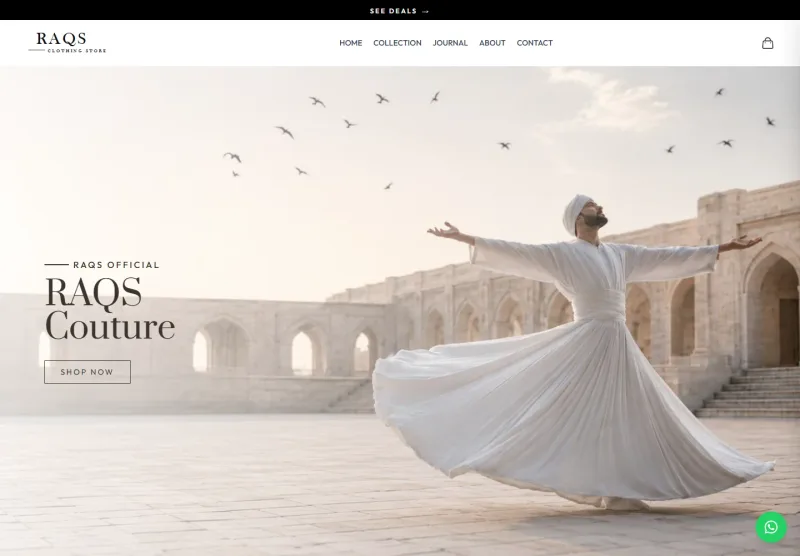
A related website example showing a brand expressed through a digital experience. This is not a claim that we created every client logo or brand asset.
 View case study ↗
Fashion ecommerce
An editorial brand experience connecting collection discovery, brand storytelling and customer information.
Read the case studyEvidence instead of empty promises
A finished deliverable and a business result are different things. We agree what can be tested directly and what needs observation after release.
Agree the positioning, audience, use cases and criteria for choosing a concept.
Review small-size use, readable pairings, export formats and the important touchpoints.
Test whether the team can apply the guidance consistently. Brand recognition or commercial impact needs separate research.
You do not need a perfect brief
A few useful inputs make the first conversation more specific. If something is missing, we can identify it together.
Share your brief ↗Use redacted examples where needed. Don’t send passwords or private customer records in an enquiry.
Your offer, intended audience and the impression the identity should communicate.
Current logos, previous assets and the elements you want to preserve or change.
The website, product, presentation, social or print formats that actually need the identity.
Who approves direction and which editable formats, licences and rights the proposal must address.
Useful answers before we start
Have a question specific to your project? Tell us the context and we’ll discuss the next step.
Ask the team ↗Possible project types include new brand identities, brand refreshes, digital brand systems, launch asset kits, social & presentation templates, brand guidelines & handover. We define the deliverables, dependencies and acceptance criteria in the proposal for your project.
No. A logo is one part of the identity. Positioning, audience, visual language and practical applications help explain how the brand should behave across different touchpoints.
The proposal specifies editable source formats, export formats and usage rights. Font, stock asset and third-party licence terms are identified separately.
Yes, where that suits the brief. We can review the existing mark and build a more coherent supporting system rather than assume a complete replacement is necessary.
Only the applications listed in the agreed scope are included. We can discuss a connected rollout, but a core identity project does not automatically contain every digital and print deliverable.
We review the requirements, integrations, available assets and review responsibilities before proposing a price and delivery plan. The website estimator is an illustrative planning tool, not a binding quotation or a promised delivery date.
The proposal defines source and design access, documentation, account ownership, licensing and any training or support. Third-party subscriptions, maintenance and future feature work are identified separately rather than assumed to be included.
Your next project starts with a conversation
Tell us what you need to improve, what you have already tried and what matters most.
Let’s discuss your project ↗